

In 2025 as well, Formula 1 cars use braking systems produced by Brembo, the Italian company present in Formula 1 since 1975 and author of over 500 Grand Prix victories with its braking systems. For the 2025 season, which begins in Australia, Brembo has developed customized solutions for each Team and supplies most of the cars with hydraulic components (calipers, master cylinders, and by-wire units) and friction materials (carbon discs and pads).
| Front | Rear | |
|---|---|---|
| Disc diameter | 328 mm | 280 mm |
| Disc thickness | 32 mm | 32 mm |
| Number of holes | From 1,000 to 1,100 | 900 |
| Caliper pistons | 6 | 6/4 |
| Cooling system | Air | Air |
| Pad material | Carbon | Carbon |
| Disc material | Carbon | Carbon |
| Caliper material | Aluminum Alloy | Aluminum Alloy |
Brembo Brake F1
Brembo carbon F1 brakes, characteristics
Over the last twenty years, Brembo has revolutionized the concept of the brake disc in Formula 1. Initially, carbon discs had a thickness of 28 mm, with a maximum of 72 holes arranged in a single row and a hole diameter exceeding 10 millimeters.
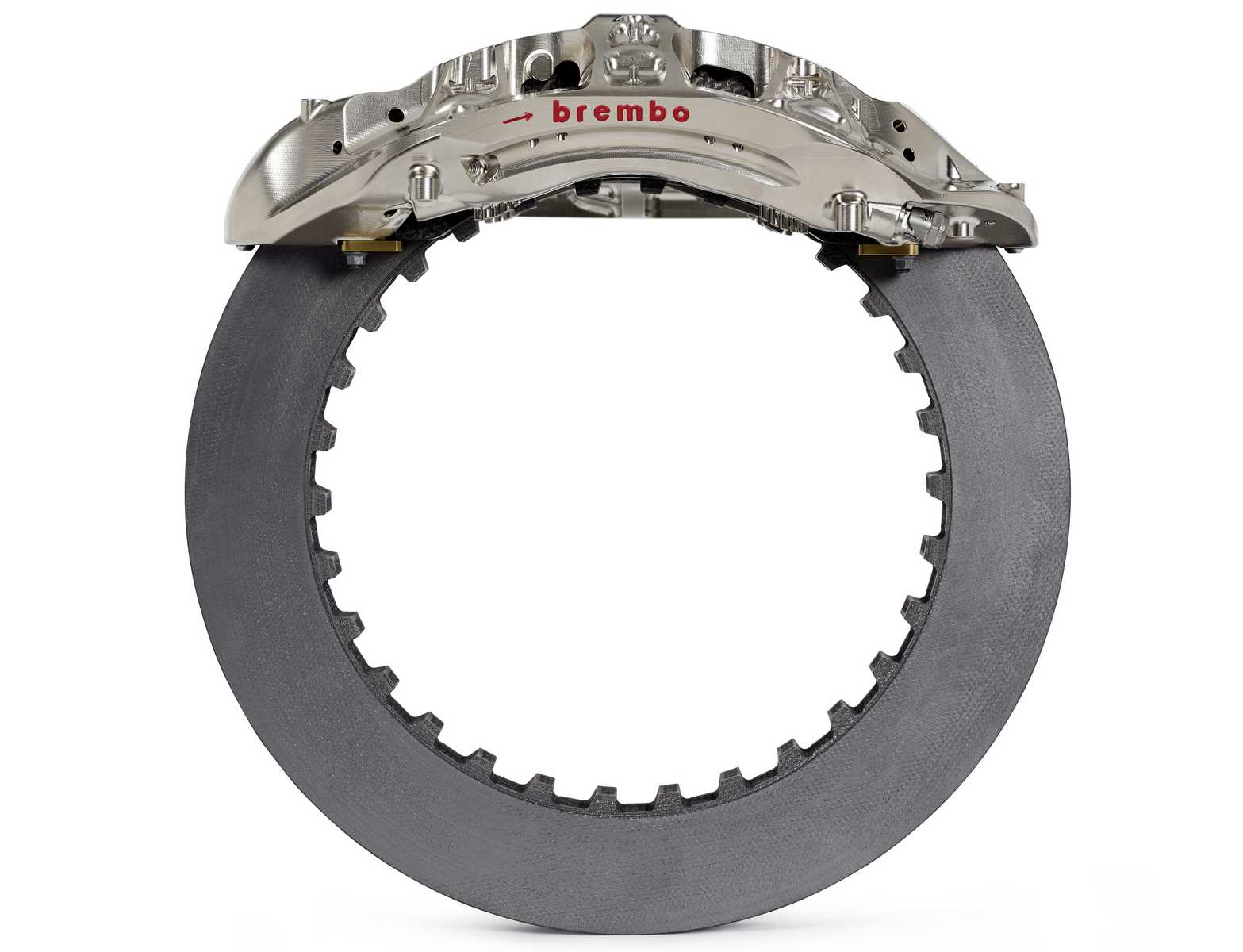
Today, the diameter of the discs has increased from 278 mm to 328 mm for the front and from 266 mm to 280 mm for the rear, with a thickness of 32 mm and a number of holes between 1,000 and 1,100 for the front and up to 900 for the rear in the most extreme cooling configuration.
Brembo F1 brake calipers, on the other hand, have up to 6 pistons, the maximum number allowed by the regulations; they are made of aluminum alloy machined from solid and nickel-plated, for all drivers on the grid.
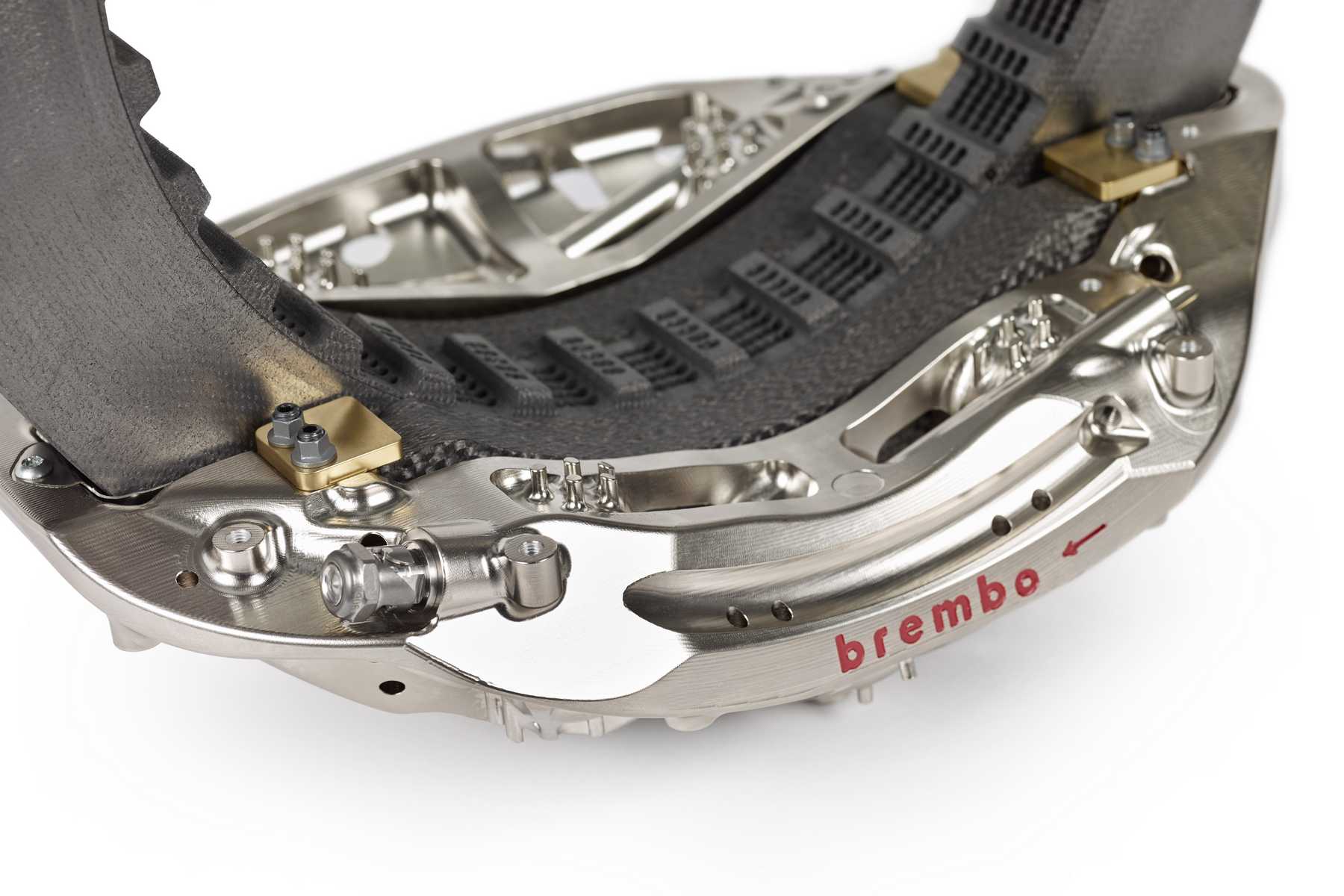
These brakes allow current cars to decelerate, for example from 313 km/h to 75 km/h in just 122 meters. To do this, drivers brake for 2.86 seconds, exerting a load of 129 kg on the brake pedal, while the braking power is 2,101 kW.
Brembo F1 brake thickness
For the 2025 championship, the last with the current technical regulations, the teams supplied by Brembo use two different types of carbon discs: “wide spline” and “single sided spline”. In the specification called “wide spline,” the thickness of the drive – the part in contact with the bell – is equal to the thickness of the disc, while in the specification called “single sided spline,” the thickness of the drive is less than the thickness of the disc.
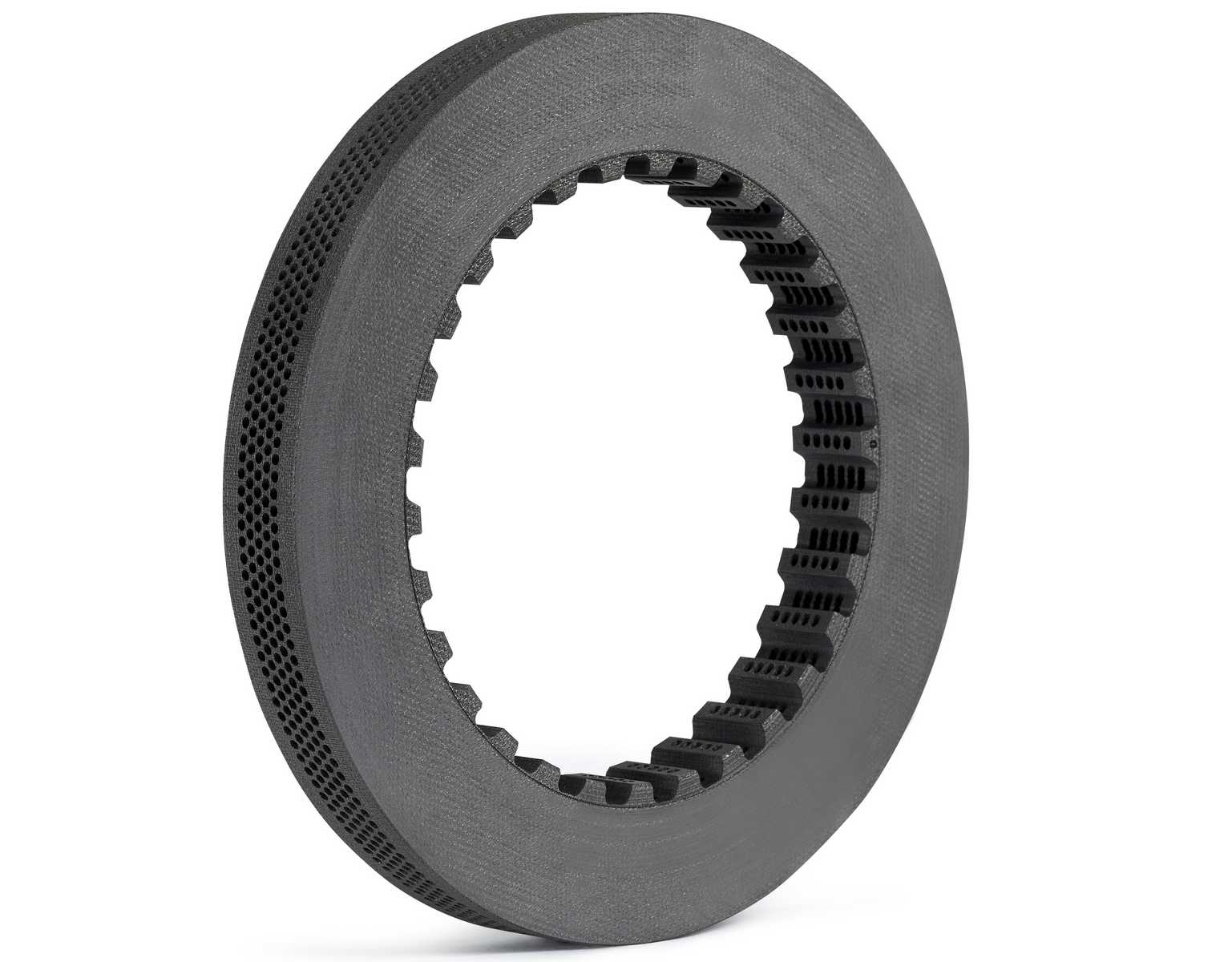
This second solution can favor a different disc ventilation strategy and better wheel corner packaging, but at the expense of optimal mechanical stress on the carbon, which limits the possible drilling for ventilation. The choice of one or the other solution depends on the needs of each individual team based on the design of the individual cars.
Brembo and AP Racing F1 brake calipers
Brembo brake calipers therefore equip all 10 Formula 1 teams: specifically, 9 teams are supplied with Brembo calipers, while one team receives AP Racing calipers, a company based in Coventry, part of the Bergamo-based group. All teams use 6-piston calipers on the front, while on the rear, 8 teams prefer the 6-piston caliper and only 2 teams mount a 4-piston caliper.
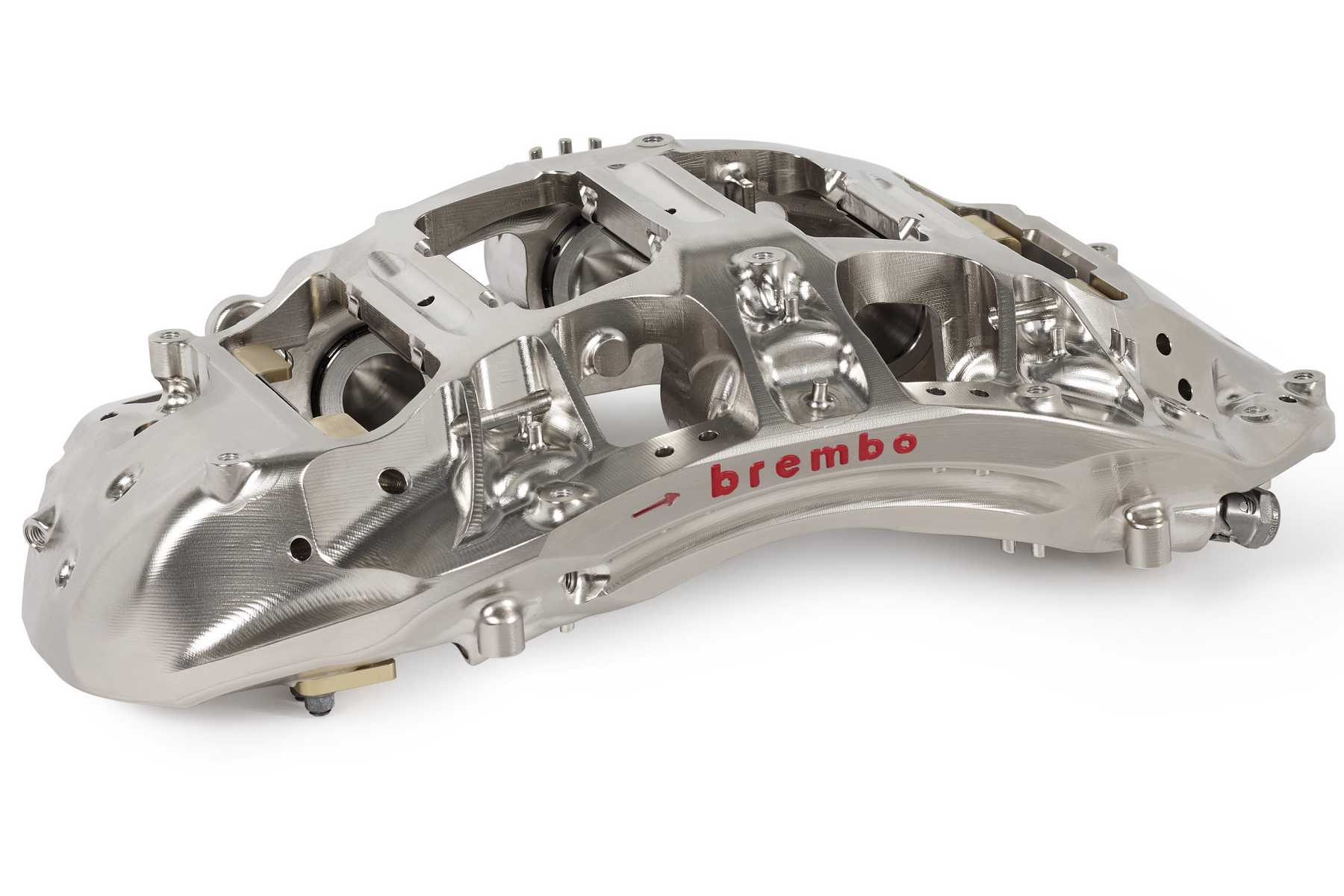
Furthermore, to adapt to the different needs of the teams, the calipers adopt different brake master cylinder systems. Specifically, five teams use brake master cylinders supplied by Brembo and AP Racing, while four teams mount by-wire units developed by Brembo, which manage rear braking by instantaneously adjusting the balance between dissipative and regenerative braking. Finally, eight teams use clutches produced by AP Racing.
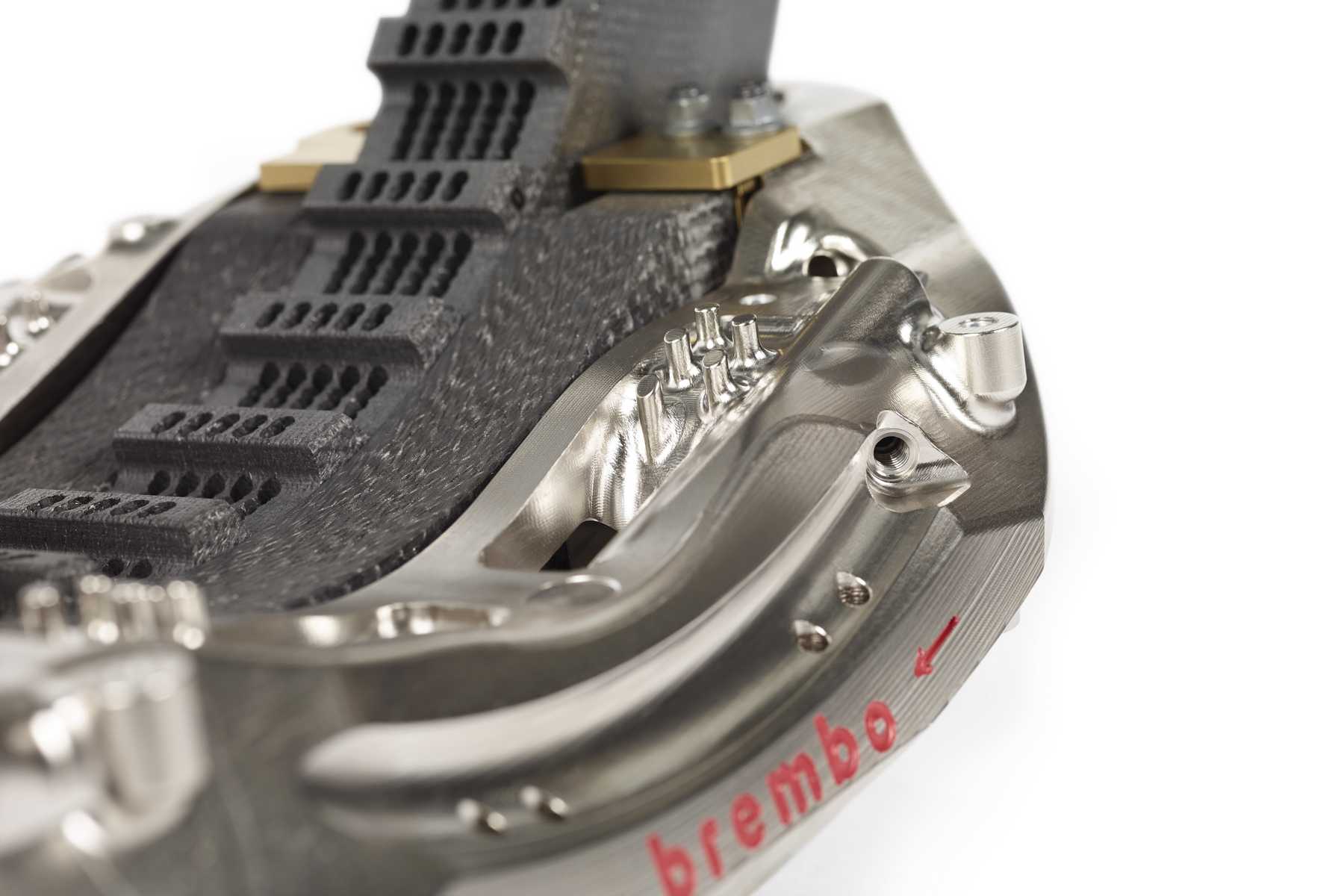
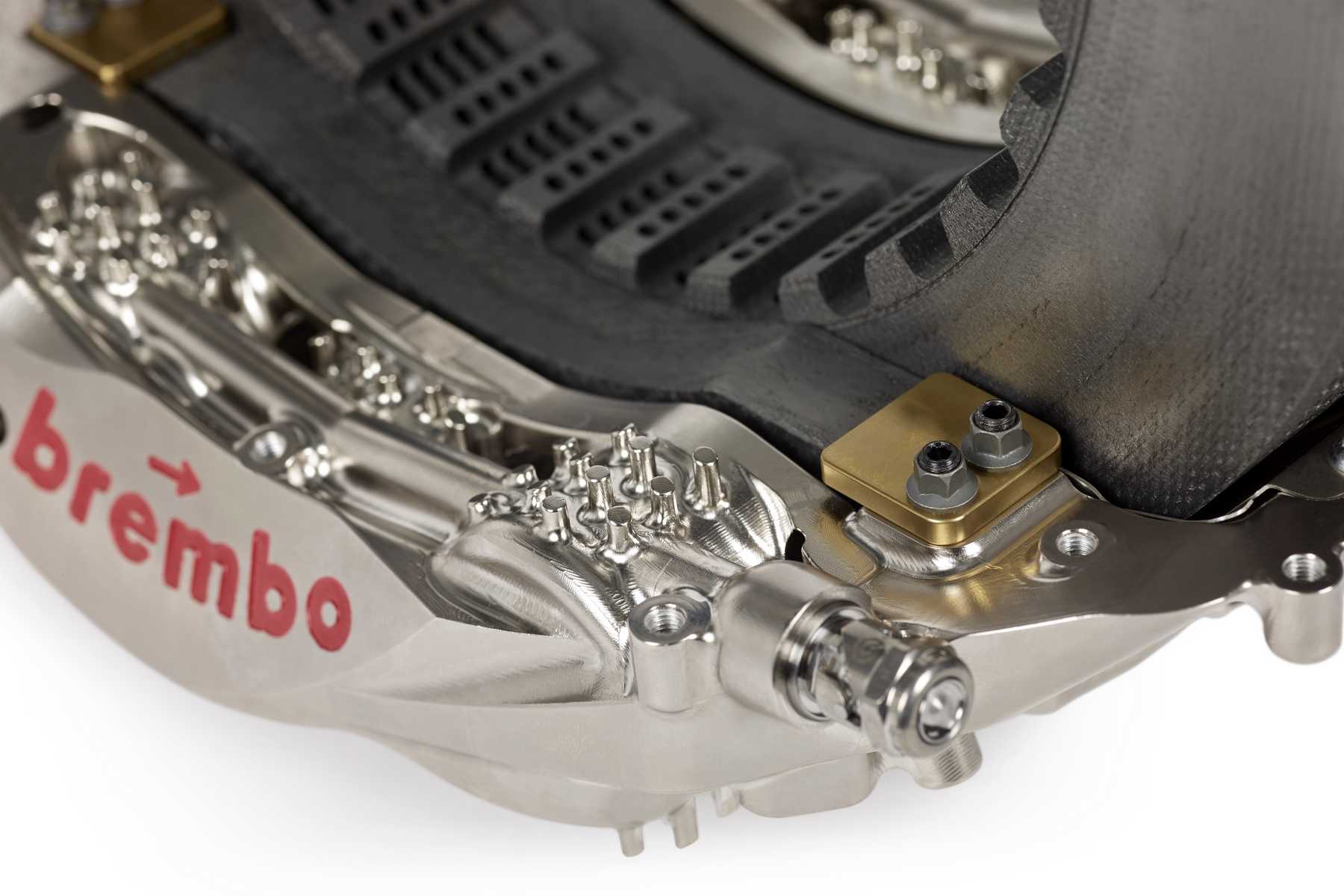
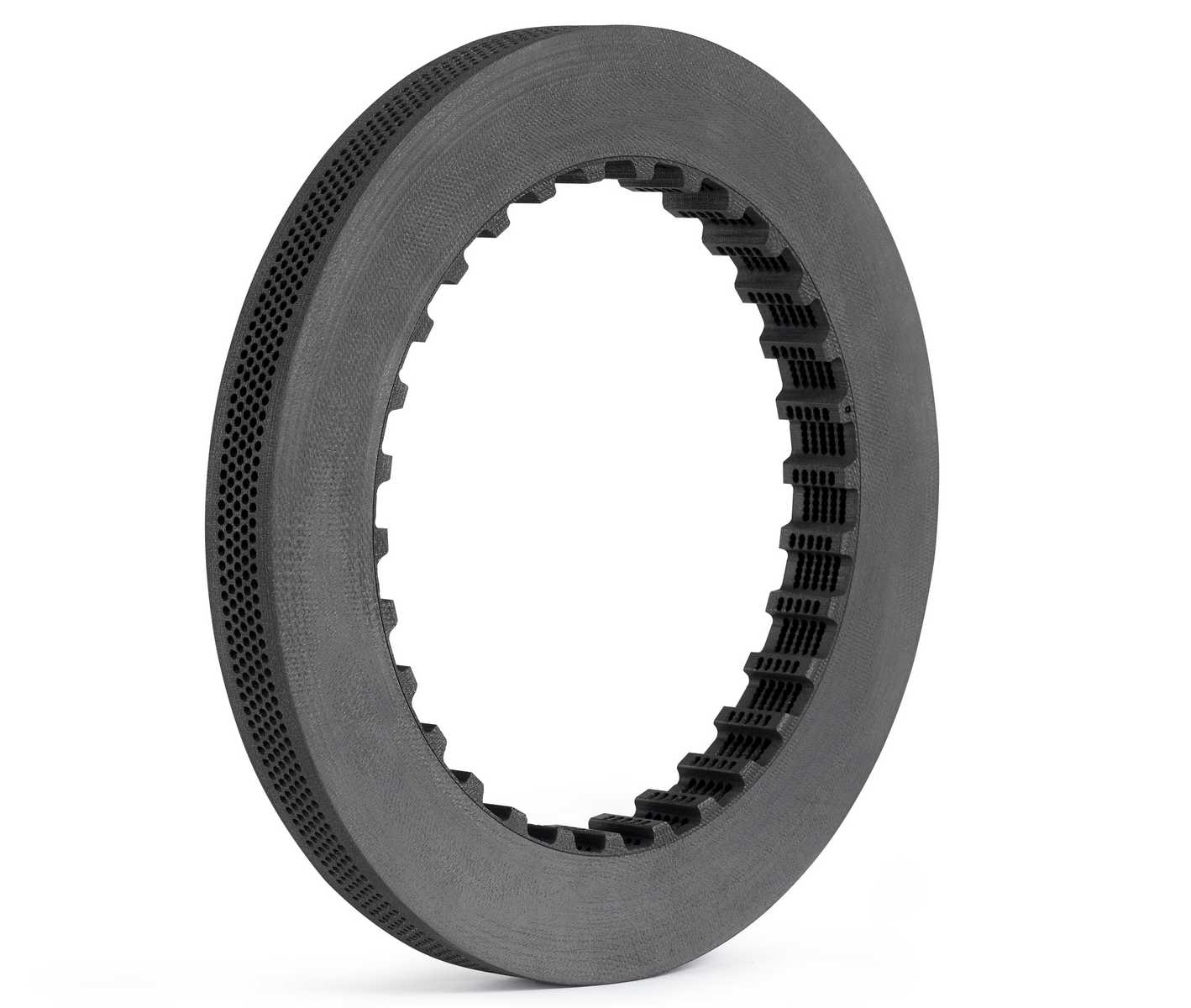

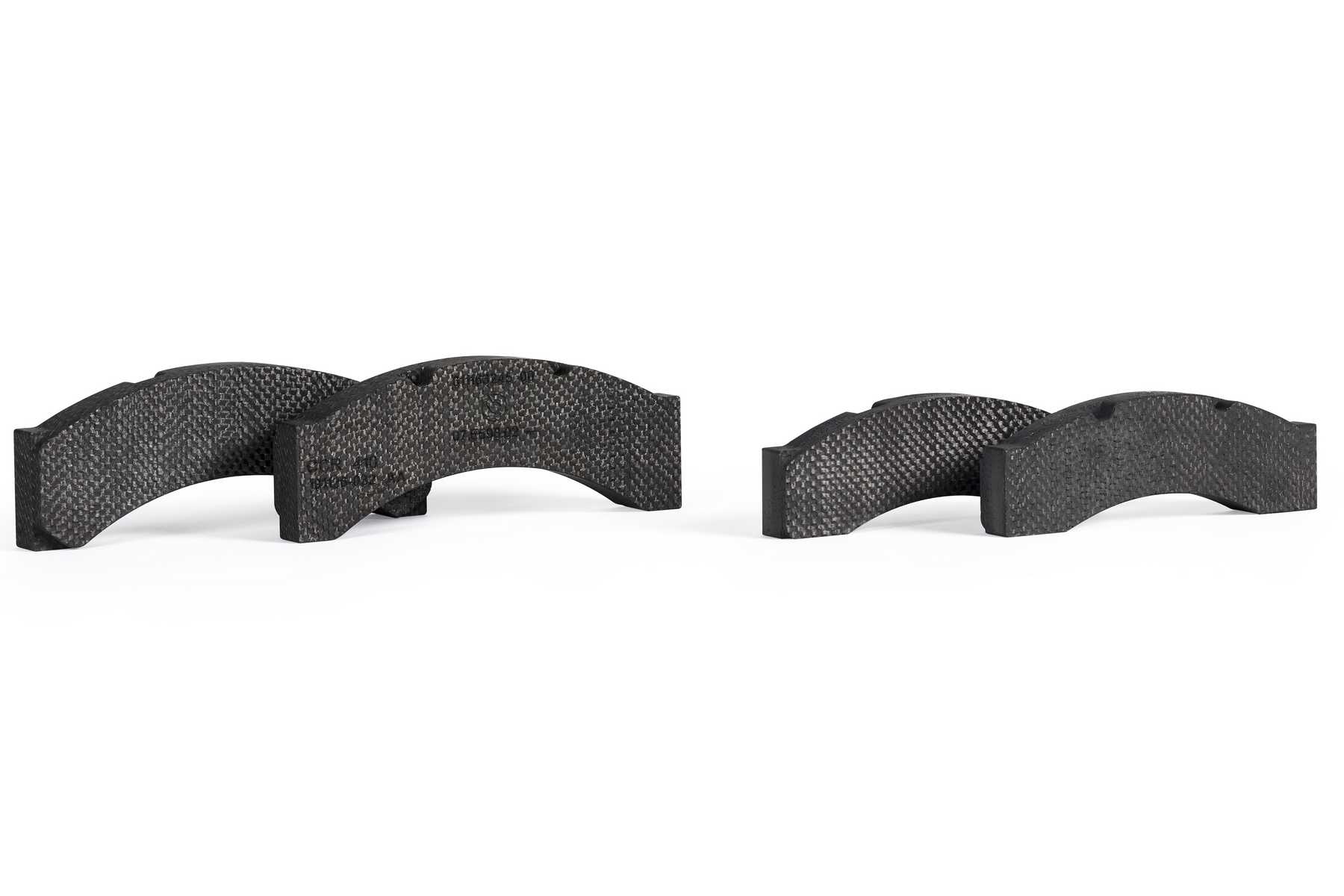
Using sensors mounted in the wheel corners, team engineers can constantly monitor the temperature of the discs and calipers. Based on the data collected, they can assist the driver in managing temperatures and the braking balance on the car. On average, in a season, Brembo supplies each team with 2 cars 10 sets of calipers, from 140 to 240 discs, and from 280 to 480 pads.
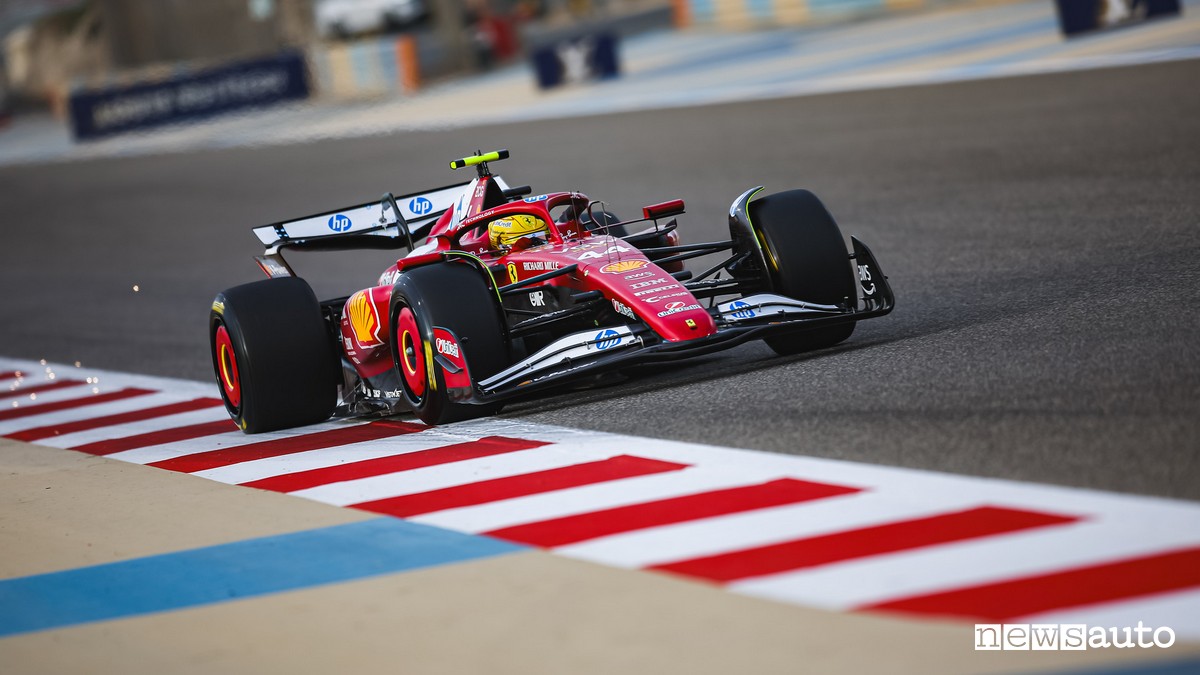
Ventilation: vital for cooling discs and calipers.
Over the years, the ventilation of Brembo brake discs and calipers has undergone a constant transformation, leading to a significant improvement in the performance of the braking system in Formula One, where temperatures can exceed 1,000°C.
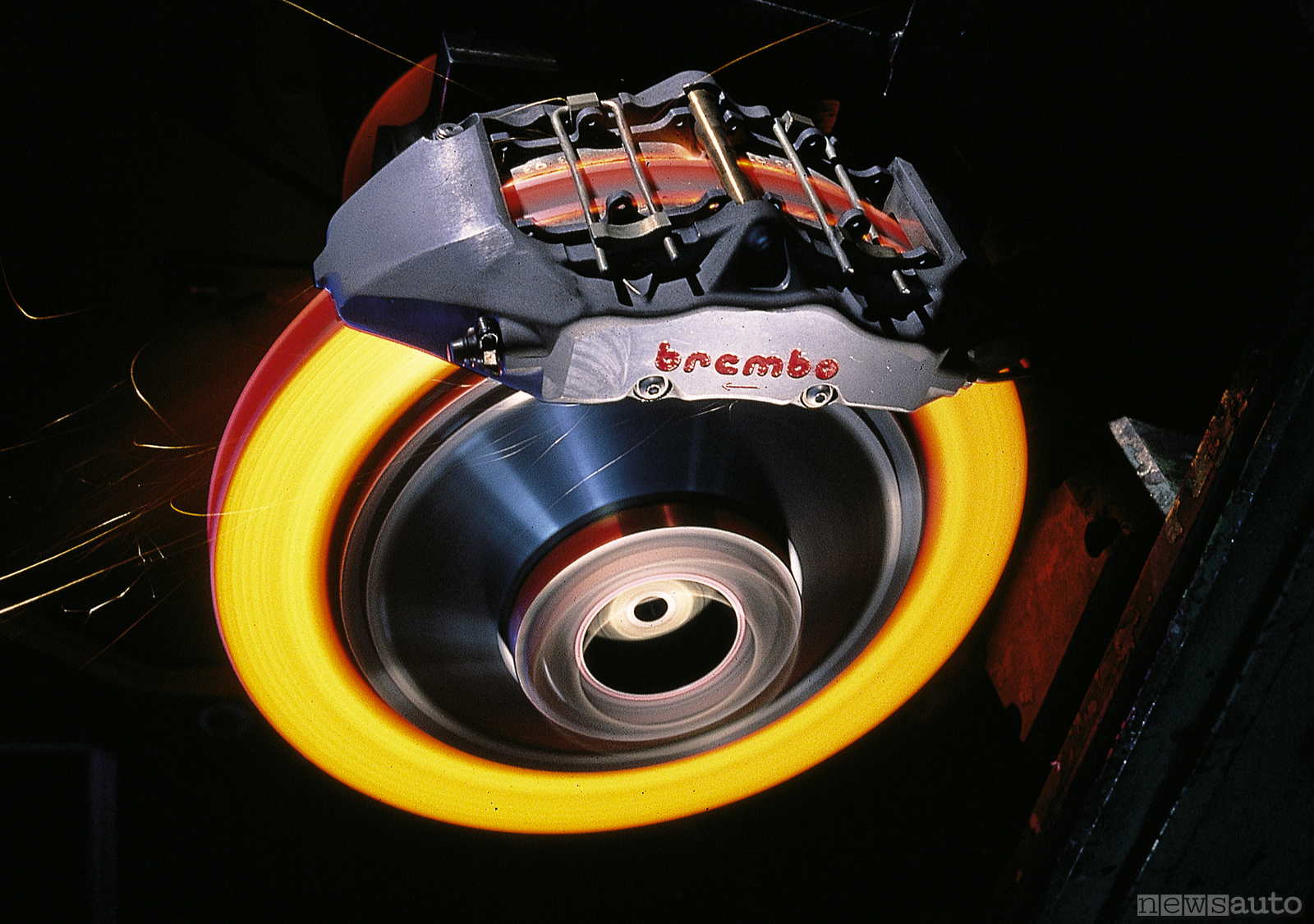
The design of the ventilation holes on the composite material of the disc has also contributed significantly, requiring maximum precision on extremely small diameter holes. Above is a very scenic image representing a glowing carbon disc during a bench test session.