Ferrari SF-26: the secret of the new air intake
A new air intake cleverly developed on the Ferrari SF-26 that directly cools the single-seater's intercooler. It is not an absolute novelty, but it has been developed in a strategic position. Let's find out how it works.
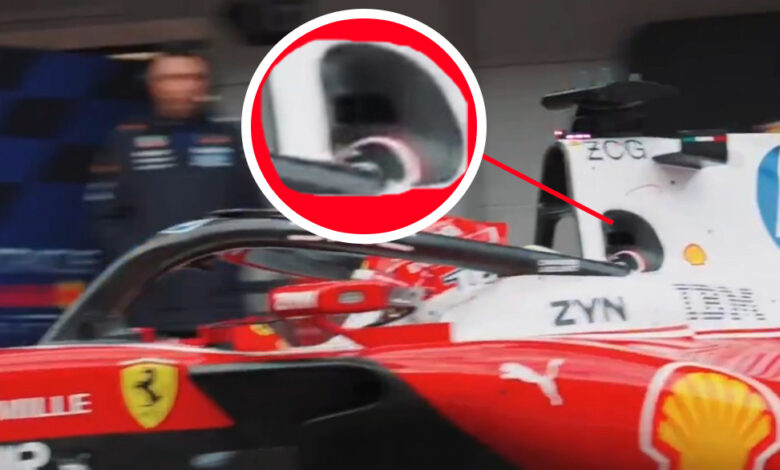
The Ferrari SF-26 continues to be a topic of discussion in the Formula 1 paddock, not only for the choices related to the new regulatory era but also for some extremely refined technical solutions. Among these, an innovative air intake stands out, integrated into an unprecedented position behind the driver’s helmet, designed to optimize Power Unit cooling and improve the overall aerodynamic efficiency of the car. A solution that confirms the new approach of the Maranello-based team in designing the new car: maximum integration between aerodynamics and mechanics, with the goal of gaining performance in every possible area.
Intercooler cooling: Maranello’s choice with the new air intake
The Maranello team has chosen to cool the intercooler through a new air intake located behind the driver’s helmet, moving away from more traditional and visually obvious configurations. This choice allows for integrating the cooling system in a more compact way, reducing the need for large openings on the bodywork.
From a technical point of view, the advantage is twofold: on one hand, it ensures a direct and efficient airflow to the intercooler; on the other, it reduces the aerodynamic impact of large dynamic intakes, which are notoriously penalizing in terms of drag.
Aerodynamics: less drag and more rear downforce
One of the most interesting aspects of the solution adopted on the Ferrari SF-26 concerns the reduction of drag. Thanks to a more compact air intake, the car features cleaner surfaces and decidedly more efficient flow management.
This approach allows for directing cleaner air towards the rear wing, improving its aerodynamic efficiency and the ability to generate downforce without compromising top speed. A fundamental detail in a regulatory context where aerodynamic efficiency represents one of the main performance factors.
This new air intake should not be seen as an absolute novelty in Formula 1 technology. However, the cleverness of where it has been applied is to be commended. It would not be surprising to see other cars using a similar solution as early as the first races of the championship.