F1 | Australian GP 2026 RACE CLASSIFICATION: results and order of arrival. Russell wins, Ferrari on the podium
A triumphant start to the season for the Silver Arrows in the opening round of the World Championship: Russell dominates the race, while Kimi Antonelli enjoys a dream podium debut. Leclerc takes 3rd to save Ferrari's honor.
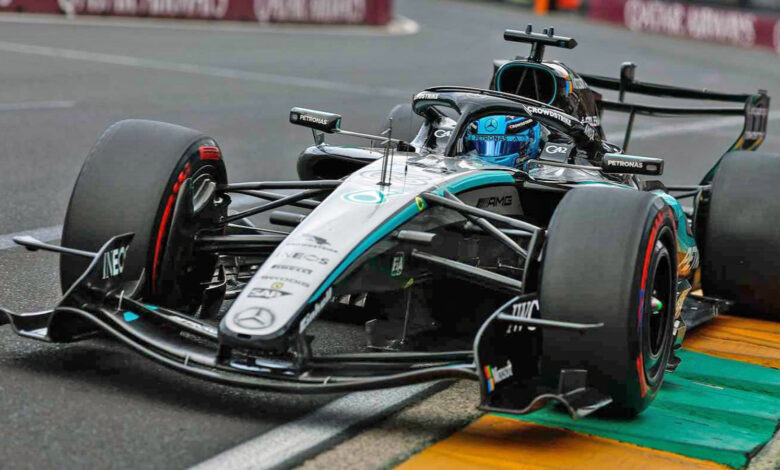
The 2026 Formula 1 season kicked off with a dominant Mercedes performance at the Australian Grand Prix. On the Melbourne street circuit, George Russell claimed victory ahead of teammate Andrea Kimi Antonelli, completing a stunning 1-2 finish for the Silver Arrows. Charles Leclerc also made the podium, finishing third for Ferrari ahead of Lewis Hamilton in fourth. This marked Russell’s sixth career win, secured after a controlled second half of the race once he took the lead from the Ferraris
2026 F1 Australian GP RACE
F1 | Australian GP 2026 RACE
- Podium F1 gara
- F1 AUSTRALIAN GP RACE CLASSIFICATION – FINAL RESULTS
- RACE ANALYSIS: Driver Standings and Key Positions
- Mercedes: A Historic 1-2 Finish with Andrea Kimi Antonelli on the Podium
- Ferrari: Leclerc 3rd on the Podium, Hamilton Just Outside the Top Three
- Fastest Lap Analysis: Comparing Laps Between Mercedes, Ferrari, and Red Bull
- Top 10 Standings: Fastest Laps in the Race (Melbourne 2026)
Podium F1 gara
1) George Russell (Mercedes)→ 58 laps
2) Kimi Antonelli (Mercedes) +2.974
3) Charles Leclerc (Scuderia Ferrari) +15.519
F1 AUSTRALIAN GP RACE CLASSIFICATION – FINAL RESULTS
| Pos | DRIVER | TEAM | TIME | POINTS |
|---|---|---|---|---|
| 1 | George Russell | Mercedes | LEADER | 25 |
| 2 | Kimi Antonelli | Mercedes | +2.974 | 18 |
| 3 | Charles Leclerc | Scuderia Ferrari | +15.519 | 15 |
| 4 | Lewis Hamilton | Scuderia Ferrari | +16.144 | 12 |
| 5 | Lando Norris | McLaren | +51.741 | 10 |
| 6 | Max Verstappen | Red Bull | +54.617 | 8 |
| 7 | Oliver Bearman | Haas | +1 GIRO | 6 |
| 8 | Arvid Lindblad | Racing Bulls | +1 GIRO | 4 |
| 9 | Gabriel Bortoleto | Audi | +1 GIRO | 2 |
| 10 | Pierre Gasly | Alpine | +1 GIRO | 1 |
| 11 | Esteban Ocon | Haas | +1 GIRO | 0 |
| 12 | Alexander Albon | Williams | +1 GIRO | 0 |
| 13 | Liam Lawson | Racing Bulls | +1 GIRO | 0 |
| 14 | Franco Colapinto | Alpine | +2 GIRI | 0 |
| 15 | Carlos Sainz | Williams | +2 GIRI | 0 |
| 16 | Sergio Perez | Cadillac | +3 GIRI | 0 |
| 17 | Lance Stroll | Aston Martin | +15 GIRI | 0 |
| 18 | Fernando Alonso | Aston Martin | DNF | 0 |
| 19 | Valtteri Bottas | Cadillac | DNF | 0 |
| 20 | Isack Hadjar | Red Bull | DNF | 0 |
| 21 | Oscar Piastri | McLaren | DNF | 0 |
| 22 | Nico Hulkenberg | Audi | DNF | 0 |
RACE ANALYSIS: Driver Standings and Key Positions
As the lights went out, Leclerc got a perfect launch off the grid, overtaking Russell into Turn 1 to take the lead ahead of the Mercedes driver and Hamilton. However, Russell responded immediately in the opening laps, reclaiming the position before a successful counter-move by the Monegasque driver in the early stages.
The battle between Ferrari and Mercedes electrified the start of the race, with Russell constantly shadowing the two “Rosse.” On Lap 8, the Briton retook the lead after a decisive move, while Antonelli began charging through the field, joining the fight for the top positions.
The race saw its first neutralisation on Lap 11 when Hadjar pulled over with a power unit failure, triggering a Virtual Safety Car (VSC). At this stage, Mercedes opted for an aggressive strategy by pitting for Hard tires, while the Ferraris stayed out on Mediums, attempting to extend their stint.
Just after the halfway point, Russell successfully completed his comeback: on Lap 28, he overtook Hamilton at Turn 9 to take definitive control of the race. From that moment on, the Mercedes duo dictated a very solid pace, consistently lapping in the high 1:22s.
A second key moment occurred on Lap 19 with another Virtual Safety Car for Bottas’s Cadillac, which stopped at Turn 14. Later in the race, Fernando Alonso also retired, as Aston Martin chose to preserve components following a difficult outing.
In the closing stages, Russell and Antonelli managed their gap to the Ferraris, maintaining a margin of around 15 seconds. With five laps to go, the top positions remained stable, while Norris and Verstappen were locked in a battle for fifth place.
Russell started the final lap with over a three-second lead on Antonelli and crossed the line as the winner of the Australian Grand Prix, completing a Mercedes 1-2 with the young Italian in second. Behind them, Leclerc finished third, followed by Hamilton
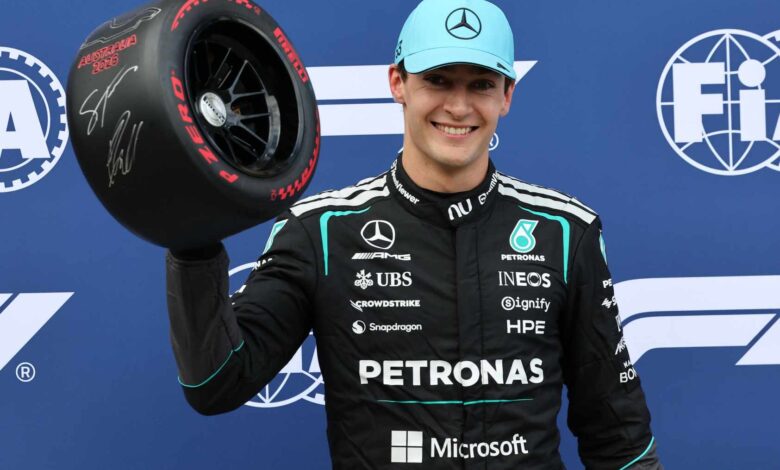
Mercedes: A Historic 1-2 Finish with Andrea Kimi Antonelli on the Podium
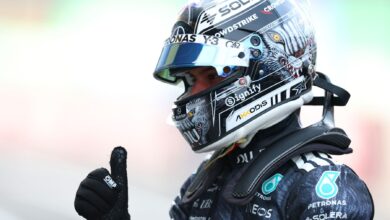
The Mercedes triumph is completed by a historic result for Italian motorsport: Andrea Kimi Antonelli’s second-place finish. In his official debut, the young talent showed surprising maturity, matching his teammate’s pace and fending off attacks from pursuers. This spectacular 1-2 finish sends a clear signal to the championship: Mercedes is the team to beat.
Ferrari: Leclerc 3rd on the Podium, Hamilton Just Outside the Top Three
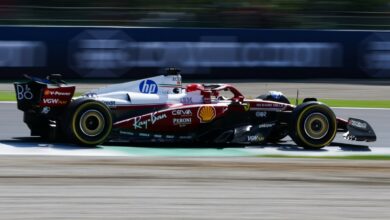
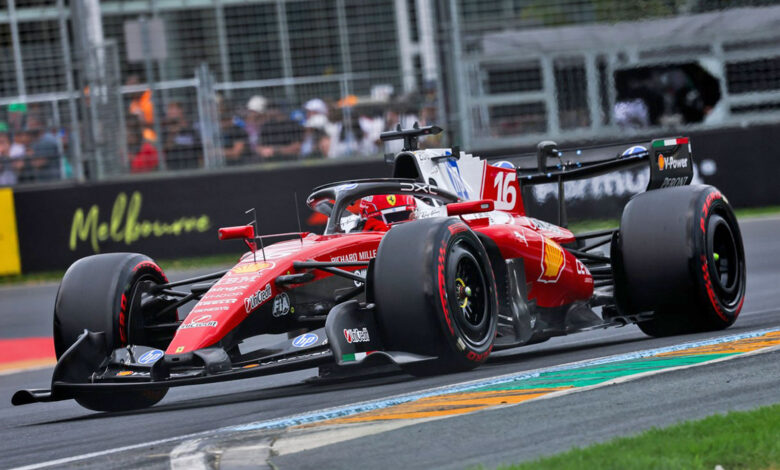
Despite the Silver Arrows’ dominance, Ferrari leaves Melbourne knowing they are the second-strongest force in the world championship, albeit with a technical gap to close. Charles Leclerc maximized the potential of the SF-26, snatching a precious third place that saves the “Cavallino’s” honor on a weekend where Mercedes appeared unreachable. The Monegasque driver attempted to challenge Russell in the early stages but eventually had to yield to the superior tire management of the Silver Arrows. Behind him, a solid Lewis Hamilton finished in fourth place. Although staying just off the podium, the Briton confirmed a good feeling with the car, bringing home heavy points for the Constructors’ standings and finishing the race with a consistent pace that bodes well for the upcoming rounds.
Fastest Lap Analysis: Comparing Laps Between Mercedes, Ferrari, and Red Bull
The battle for the fastest lap in Melbourne confirmed the exceptional efficiency of the new 2026 cars. Despite Mercedes’ dominance, it was Max Verstappen who snatched the additional point in the final stages. Thanks to a furious comeback from 20th to 6th position, the Dutchman utilized a fresh set of tires in the closing laps to set the absolute best time. However, the data shows an extremely solid race pace for Mercedes, with Kimi Antonelli able to drop below 1:23 by mid-race, demonstrating immediate confidence with the W17. At Ferrari, Leclerc and Hamilton responded with very competitive times (both under 1:23.4) in an attempt—later failed due to strategy—to close the gap to the Silver Arrows during the final stint. The fastest lap comparison highlights that while Mercedes has the most balanced package, Red Bull maintains a top speed and “time attack” capability that promises an extremely hard-fought championship.
Top 10 Standings: Fastest Laps in the Race (Melbourne 2026)
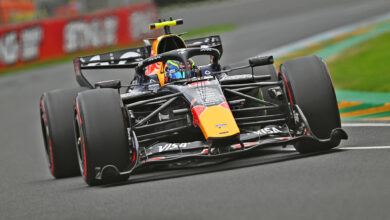
In the 2026 Australian Grand Prix, Max Verstappen set the fastest lap of the race with a time of 1:21.980. The Dutchman achieved this benchmark on Lap 56 (out of 58), taking advantage of an extra pit stop strategy late in the race to fit fresh tires. Thanks to this “strike,” Verstappen managed to snatch the bonus point despite an uphill Sunday, marked by starting from the last position due to a crash in Saturday’s qualifying. In addition to the fastest lap point, Verstappen gathered another 8 points for his 6th place finish, totaling 9 points.
| Pos | DRIVER | TEAN | TIME | LAPS |
| 1 | Max Verstappen | Red Bull | 1:21.980 | 56 |
| 2 | Lando Norris | McLaren | 1:22.167 | 43 |
| 3 | Lewis Hamilton | Ferrari | 1:22.536 | 46 |
| 4 | Kimi Antonelli | Mercedes | 1:22.582 | 22 |
| 5 | George Russell | Mercedes | 1:22.765 | 18 |
| 6 | Liam Lawson | Racing Bulls | 1:22.970 | 43 |
| 7 | Oscar Piastri | McLaren | 1:23.242 | 43 |
| 8 | Gabriel Bortoleto | Audi | 1:24.192 | 43 |
| 9 | Yuki Tsunoda | Racing Bulls | 1:24.194 | 43 |
| 10 | Charles Leclerc | Ferrari | 1:24.553 | 5 |
The performance comparison between the 2026 and 2025 cars in Melbourne reveals the drastic impact of the new technical regulations. As predicted by engineers, the new single-seaters — which are lighter but feature less aerodynamic downforce and a different electrical energy management system — proved to be significantly slower over a single flying lap.
👇 Ti interessa questo argomento? Clicca sui tag qui sotto per esplorare tutti gli articoli e gli approfondimenti correlati!