F1 2026 | Barcelona Test: times, mileage, and first signs of the new era
F1 2026 pre-season testing in Barcelona has concluded: here are the times and who completed the most laps among the various teams and drivers present.
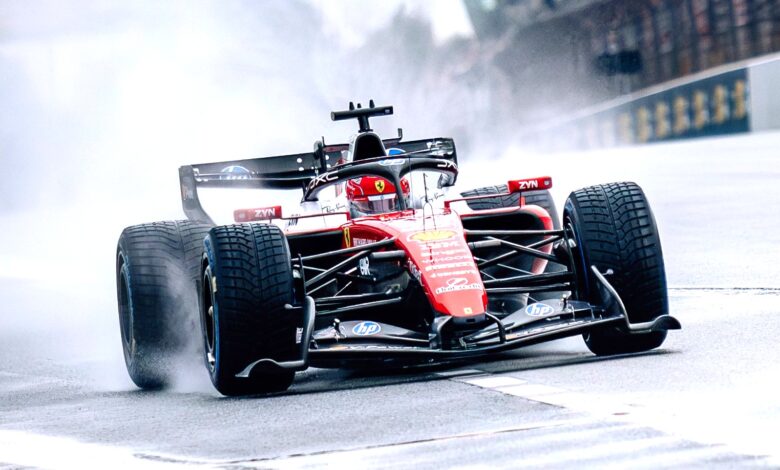
The 2026 pre-season tests held at the Circuit de Catalunya in Barcelona represented the first real track contact for the new Formula 1, called to face one of the most significant regulatory revolutions of recent years. Five days of intense testing, useful more for understanding project reliability than establishing real hierarchies, but which have nonetheless begun to provide interesting indications.
As always, times must be interpreted with caution: fuel loads, engine mappings, and very different work programs make the stopwatch only part of the picture. However, some trends are already starting to emerge with some clarity.
Barcelona Test 2026
F1 2026 Barcelona Test, times: Ferrari ahead of everyone on the flying lap
The absolute best time of the test carries a heavy signature: Lewis Hamilton. The seven-time world champion, at the wheel of the Ferrari, stopped the clock at 1:16.348 on the final day, resulting in the fastest of the entire Shakedown.
An important signal not so much for the time itself, but for the fact that Ferrari managed to deliver performance with both drivers. In fact, Charles Leclerc also immediately placed himself in the top positions, confirming a technical base that already seems well-balanced.
Behind the Scuderia, Mercedes and McLaren were seen very close to each other, while Red Bull maintained a more covered profile, never giving the impression of truly seeking the limit. In this context, the performance of Kimi Antonelli should also be highlighted, as he continues to impress with his naturalness and speed in his growth path in Formula 1.
The fastest times at the F1 2026 Tests in Barcelona
| DRIVER | TEAM | DAY | LAP |
|---|---|---|---|
| Lewis Hamilton | Ferrari | DAY 5 | 1:16.348 |
| George Russell | Mercedes | DAY 4 | 1:16.445 |
| Lando Norris | McLaren | DAY 5 | 1:16.594 |
| Charles Leclerc | Ferrari | DAY 5 | 1:16.653 |
| Kimi Antonelli | Mercedes | DAY 5 | 1:17.081 |
| Oscar Piastri | McLaren | DAY 4 | 1:17.446 |
| Max Verstappen | Red Bull | DAY 5 | 1:17.586 |
| Pierre Gasly | Alpine | DAY 5 | 1:17.707 |
| Isack Hadjar | Red Bull | DAY 2 | 1:18.159 |
| Esteban Ocon | Haas | DAY 5 | 1:18.393 |
| Oliver Bearman | Haas | DAY 5 | 1:18.423 |
| Arvid Lindblad | Racing Bulls | DAY 4 | 1:18.451 |
| Liam Lawson | Racing Bulls | DAY 4 | 1:18.840 |
| Franco Colapinto | Alpine | DAY 3 | 1:19.150 |
| Nico Hulkenberg | Audi | DAY 5 | 1:19.870 |
| Gabriel Bortoleto | Audi | DAY 5 | 1:20.179 |
| Fernando Alonso | Aston Martin | DAY 5 | 1:20.795 |
| Valtteri Bottas | Cadillac | DAY 5 | 120.920 |
| Sergio Perez | Cadillac | DAY 4 | 1:21.024 |
| Lance Stroll | Aston Martin | DAY 4 | 1:46.404 |
| Alex Albon | Williams | ||
| Carlos Sainz | Williams |
First differences between teams, but a cautious reading
Observing the best timing references per team, an apparently balanced picture emerges at the top, with Ferrari, Mercedes, and McLaren within a few tenths. Red Bull is further back, while the gap increases significantly moving down towards the middle and back of the grid.
The most discussed data concerns Aston Martin. The best time recorded by Fernando Alonso is several seconds off the lead, a result that fuels questions about the immediate competitiveness of the 2026 project. Doubts also shared by Martin Brundle, who pointed out that the presence of Adrian Newey does not automatically guarantee results in the short term.
Who completed the most laps on track?
While lap times should be taken with a grain of salt, the number of completed laps is often a much more reliable indicator, especially in a year of radical technical change.
From this perspective, Mercedes emerges from Barcelona extremely strengthened. The Brackley team covered the most kilometers, demonstrating technical solidity and extremely efficient test management. Ferrari also accumulated significant mileage, confirming good overall reliability.
The performance of Haas was also very positive, as they continue to stand out for their practicality in testing, while Alpine carried out methodical and continuous work.
At the opposite end of the standings, we find Aston Martin, halted by numerous technical problems, and especially Williams, which failed to complete even a single lap. An alarming signal, suggesting significant structural difficulties and a potentially very complicated start to the season.
| TEAM | NO. OF LAPS |
|---|---|
| Mercedes | 500 |
| Ferrari | 440 |
| Haas | 391 |
| Alpine | 349 |
| Racing Bulls | 319 |
| Red Bull | 303 |
| McLaren | 291 |
| Audi | 244 |
| Cadillac | 164 |
| Aston Martin | 65 |
| Williams | 0 |
What Barcelona really tells us
At the end of the five days of testing, some indications appear quite clear. Ferrari seems to have a competitive base, especially on the flying lap. Mercedes impresses with reliability and consistency, fundamental elements in a transition season. Aston Martin remains the big question mark, while Williams appears to be in serious trouble even before the championship begins.
With the Barcelona Shakedown archived, attention now shifts to the official tests in Bahrain, scheduled from February 11 to 13 and subsequently from February 18 to 20. It will be there that the first real race simulations will begin, with more comparable data and significantly more reliable indications. Barcelona turned on the spotlights. Bahrain will begin to tell the reality of Formula 1 2026.
👇 Ti interessa questo argomento? Clicca sui tag qui sotto per esplorare tutti gli articoli e gli approfondimenti correlati!